
Precision Automotive Injection Molding Services Ready for Your Production Run
Automotive manufacturers often struggle to produce durable, lightweight, and complex plastic parts at scale, a challenge directly solved by automotive injection molding services. This process involves injecting molten thermoplastic into precision-engineered steel molds to create components like dashboards, bumpers, and interior trim with exacting tolerances. The primary benefit is delivering high-volume, repeatable parts with superior strength-to-weight ratios, reducing vehicle mass without compromising safety. To use these services, engineers submit a 3D CAD model, and the provider manages mold design, material selection, and high-cycle production runs to meet assembly deadlines.
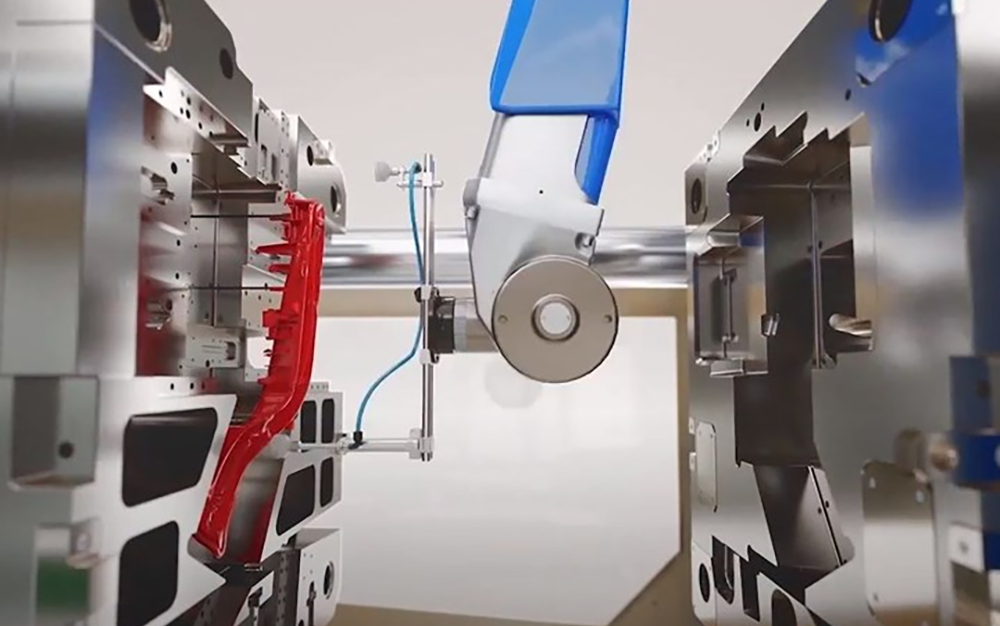
Precision Plastic Component Manufacturing for Modern Vehicles
In modern vehicles, precision plastic component manufacturing through automotive injection molding services delivers the tight tolerances required for critical systems like fuel rails and sensor housings. This process uses high-performance thermoplastics and multi-cavity molds to produce complex geometries with consistent wall thickness and zero flash, ensuring reliable part function under extreme temperatures and vibration. Advanced mold flow analysis optimizes gate placement and cooling channels to minimize warpage and cycle time. The result is lightweight, durable components that integrate seamlessly into assemblies, reducing vehicle weight without sacrificing structural integrity. Each part undergoes rigorous dimensional inspection to maintain sub-millimeter accuracy across high-volume production runs. For demanding under-hood applications, material selection becomes as critical as the mold design itself.
Why Tier-One Suppliers Prioritize High-Tolerance Tooling
Tier-one suppliers prioritize high-tolerance tooling because it directly prevents assembly line stoppages. When a steering wheel bezel or sensor housing is off by microns, it won’t mate with a mating part, halting production. This kind of scrapped batch and downtime costs far more than the precision tooling itself. They need zero-defect repeatability for every cavity in a multi-cavity mold to guarantee interchangeability across thousands of parts.
- Eliminates post-mold rework and manual trimming.
- Ensures snap-fit and press-fit joints lock correctly every cycle.
- Prevents vibration and noise complaints by holding exact wall thickness.
- Allows downstream robots to pick and place parts without vision adjustments.
Key Material Choices for Interior and Exterior Parts
For automotive injection molding services, key material choices directly impact part performance. Interior components like dashboard panels and trim leverage high-flow polypropylene (PP) for its balance of dimensional stability and scratch resistance, while exterior parts such as bumpers and mirror housings demand impact-modified polyamide (PA) or ASA for UV stability and weather resistance. The specific choice often hinges on balancing coefficient of linear thermal expansion (CLTE) with paint adhesion requirements for painted exterior trim. A clear sequence guides material selection:
- Define thermal and UV exposure level (interior vs. exterior).
- Select base resin for structural load (PP for low load, PA for high impact).
- Specify filler (glass fiber for stiffness, talc for heat resistance).
- Validate chemical resistance to cleaners or road salts.

Streamlining Production with Advanced Molding Technologies
Streamlining production with advanced molding technologies in automotive injection molding services focuses on reducing cycle times through multi-cavity and hot runner systems. These methods allow for simultaneous part formation, minimizing material waste and energy use. Real-time process monitoring via integrated sensors enables immediate adjustments to temperature and pressure, ensuring consistent part quality without manual intervention. Furthermore, automated mold change systems drastically cut downtime, allowing high-mix production runs to be sequenced efficiently. Such technologies directly enhance throughput for complex automotive components like interior trim or under-hood parts. Streamlining production with advanced molding technologies ultimately lowers per-unit costs while maintaining the tight tolerances required for vehicle assembly. This approach eliminates bottlenecks common in conventional molding workflows, delivering a faster, more reliable production pipeline.
Gas-Assist and Multi-Shot Techniques for Lightweight Parts
Gas-assist injection molding creates hollow or partially hollow channels within automotive components, reducing material usage and weight while preserving structural rigidity through pressurized nitrogen gas. Multi-shot molding, often using sequential injection of different materials, bonds layers like a rigid core with a soft-touch outer skin or integrates seals and gaskets in a single cycle. These techniques eliminate assembly steps for lightweight parts such as interior trim panels, ducts, and handles. Combining them enables complex geometries where a gas-assisted hollow core supports a robust multi-shot overmold, optimizing part consolidation for lightweight structures without sacrificing performance.
| Technique | Lightweight Mechanism | Typical Application |
|---|---|---|
| Gas-Assist | Hollows out thick sections with nitrogen | Automotive structural handles, ducts |
| Multi-Shot | Integrates multiple materials in one part | Dashboard trim with soft-touch layer |
| Combined | Gas-assist core + multi-shot surface | Lightweight armrests with integrated seal |
In-Mold Decoration and Assembly for Finished Components
In-mold decoration and assembly for finished components directly integrates film, fabric, or foil inserts during the injection cycle, producing automotive parts with bonded aesthetics or functional layers. This eliminates secondary painting, laser etching, or adhesive fastening, reducing handling damage FOX MOLD plastic injection mold manufacturer and cycle times. The process simultaneously molds and trims, delivering a complete trim piece or panel with embedded electronics or clips, ready for final vehicle assembly. Precision aligns insert registration and material flow to prevent distortion or air traps, ensuring consistent grain, color, or integrated in-mold circuitry for lighting or touch sensors without post-mold modifications.

Quality Assurance Standards Across the Supply Chain
In automotive injection molding services, quality assurance standards across the supply chain demand rigorous first article inspections (FAI) and in-process statistical process control (SPC) at every tier. Each plastic resin batch must be traced through molding, trimming, and assembly to ensure dimensional compliance with OEM specifications. Rejecting non-conforming parts at the press, rather than at final inspection, prevents costly recalls and supply chain disruptions. Consistent adherence to these protocols ensures every component meets fit, form, and function requirements, guaranteeing seamless integration into critical vehicle assemblies without deviation.
IATF 16949 Certification and Its Role in Part Consistency
IATF 16949 certification mandates a defect prevention methodology that directly enforces part consistency across automotive injection molding runs. The standard requires statistical process control (SPC) for critical mold cavity dimensions, ensuring each cycle produces identical geometry. This certification imposes a layered process audit (LPA) schedule, where every molding parameter—from melt temperature to hold pressure—is verified against a control plan before production. The resulting sequence is:
- Define critical-to-quality characteristics in the control plan.
- Monitor those characteristics via real-time SPC charts.
- Apply corrective actions before drift exceeds tolerance.
Without this structural rigor, shot-to-shot variation would compromise dimensional uniformity across every supplied part.
Real-Time Monitoring for Defect Reduction in High-Volume Runs
In high-volume automotive injection molding runs, defects can cascade into massive waste if not caught instantly. Real-time monitoring systems deploy cavity pressure and temperature sensors to capture micro-shifts in viscosity or fill imbalance. Adaptive process control loops then automatically adjust injection speed or holding pressure mid-cycle, preventing flash or short shots before thousands of faulty parts accumulate. For effective implementation, follow this sequence:
- Install cavity-specific sensors and a data acquisition unit on each mold.
- Set baseline parameters for melt temperature and pack pressure during first-sale qualification.
- Program the control system to trigger automated corrections when readings deviate beyond a 2% tolerance window.
- Enable an alert dashboard for operators to review real-time trend lines and intervene if iterative corrections fail.
This loop keeps defect rates below 50 parts per million even during 24/7 production surges.
Cost Optimization Through Design for Manufacturability
For automotive injection molding, cost optimization through Design for Manufacturability (DFM) starts with simplifying part geometry. Reducing unnecessary features like tight tolerances, steep draft angles, or complex undercuts slashes tooling costs and cycle times. You can lower material waste by designing uniform wall thicknesses, which prevents sink marks and warping. Opting for standard, off-the-shelf components over custom inserts further reduces mold complexity and lead times. Consolidating multiple parts into a single, well-designed mold eliminates assembly steps and secondary operations. Even minor adjustments to rib layouts or gate placement can dramatically improve flow and cooling efficiency, directly lowering per-part cost. Prioritizing these DFM principles during the design phase ensures your automotive components are not only functional but also inexpensive to produce at scale.
Minimizing Waste with Scientific Molding Principles
Minimizing waste in automotive injection molding relies on scientific molding principles, which treat every process variable as a measurable target. Instead of overpacking parts to compensate for inconsistency, engineers use rheology curves and pressure transducers to find a stable processing window. This eliminates short shots, flash, and dimensional drift, directly reducing material scrap. For example, identifying the exact melt temperature and fill time prevents degradation and warpage. It also trims cycle times by avoiding unnecessary hold phases. You produce more usable parts from the same resin volume, slashing waste without costly secondary operations.
Q: How does scientific molding prevent waste during production startups?
A: It uses a controlled, repeatable process to achieve first-shot capability, eliminating the long trial runs that typically generate scrap.
Prototyping Strategies Before Full-Scale Production

Effective prototyping strategies before full-scale production in automotive injection molding prioritize iterative validation to avoid costly tooling revisions. Engineers often deploy rapid tooling for functional prototypes using aluminum or soft steel molds, enabling low-volume part testing that replicates production-grade material properties. A clear sequence for minimizing cost includes:
- Creating CNC-machined or 3D-printed prototypes to verify critical geometry and tolerance stack-ups.
- Conducting short-shot analysis in the trial mold to identify fill imbalances and warpage risks.
- Performing accelerated durability tests on prototype parts to validate the design’s performance envelope before hardening production tools.
This approach allows targeted modifications, such as adjusting gate locations or wall thicknesses, directly within the prototype phase, thereby reducing the risk of expensive die modifications during mass production.
Addressing Surface Finish and Aesthetic Requirements
Addressing surface finish and aesthetic requirements in automotive injection molding begins with precise tool texture selection—shiny Class A finishes demand mirror-polished molds, while soft-touch interiors require fine EDM textures. Strategic gate placement and optimized melt flow prevent visible weld lines or sink marks on prominent panels. Specialized materials like low-gloss ASA or paintable TPO alloys directly meet OEM color and tactile specs without secondary coating. Even mold temperature control, within a narrow ±5°C window, is the unsung differentiator between a showroom-ready panel and a reject with subtle flow hesitations. Real-time cavity pressure monitoring during production ensures consistent gloss uniformity across thousands of parts.
Texture Matching for Dashboards, Trim, and Console Panels
Getting the texture right on your dashboards, trim, and console panels is all about making sure every surface feels and looks naturally connected, even if they’re molded in different runs. In automotive injection molding, seamless grain matching is the key to avoiding that distracting mismatch between a door panel and its adjacent center stack. Your molder will typically start by selecting a specific texture from an industry-standard library, then carefully align the mold’s etching direction to match your prototype. They’ll also account for plastic flow, because subtle sink or gloss shifts can ruin the effect. Precision is everything here, so trust a partner who validates each texture on actual production material before you sign off.
- Select a target gloss and grain depth from a standardized texture library (like Mold-Tech or Yick Sang).
- Align the texture direction on the mold tool to match the intended visual flow across all panels.
- Run a sample shot using the final resin to check for gloss variations and sink marks.
- Adjust texture depth or polishing grit if the match isn’t visually continuous under showroom lighting.
Class A Finishes for Exposed Exterior Moldings
For exposed exterior moldings, achieving a **Class A surface finish** demands meticulous control across the entire injection molding process. Tool steel must be polished to a mirror-like gloss to eliminate any parting lines or witness marks. The molding compound—typically a UV-stable, weatherable polymer like ASA or PC-ABS—requires precise melt temperatures to prevent sink marks or flow lines. Injection speed and packing pressure are finely tuned to replicate the tool’s texture without gloss variation. Any defect, from a micro-void to gate blush, instantly ruins the optical quality of the panel. This finish is non-negotiable for components visible on the vehicle body, demanding zero surface waviness.
Class A Finishes for Exposed Exterior Moldings: zero defect surfaces achieved through mirror-polished tooling, optimized material flow, and strict process control to eliminate all visual imperfections.
Sustainable Practices in Molded Component Fabrication
In automotive injection molding services, sustainable practices in molded component fabrication center on material optimization and process efficiency. Fabricators utilize recycled polymers, such as post-industrial regrind or PCR resins, without compromising structural integrity for interior or under-hood parts. Lightweighting through advanced mold design reduces raw material consumption per part, lowering vehicle emissions across its lifecycle. Closed-loop systems recapture and reuse scrap from sprues, runners, and defective units, minimizing landfill waste. Energy-efficient electric injection molding machines and optimized cooling cycles cut power use during production.
A key insight is that adapting mold tooling for multi-material or monomaterial designs streamlines recycling at end-of-life, directly supporting circularity in automotive manufacturing.
These methods integrate durability with reduced environmental impact.
Closed-Loop Recycling of Post-Industrial Thermoplastics
In automotive injection molding services, closed-loop recycling of post-industrial thermoplastics directly recycles scrap from your own production—sprues, runners, and rejected parts—back into the same molding process. This keeps material streams pure and consistent. Instead of sending waste to a recycler, you grind, re-blend, and feed it right back into your press, reducing raw material costs without compromising part quality. regrind ratios are carefully controlled, often up to 30%, to maintain mechanical properties. Can closed-loop recycling affect part durability? Yes, when properly managed, recycled content meets OEM specifications, though physical properties like impact resistance should be validated per application.
Biodegradable Polymers for Non-Structural Interior Features
Biodegradable polymers, such as PLA and PHA compounds, are now viable for injection molding non-structural interior features like trim panels, vent louvers, and storage bins. These materials offer sufficient stiffness and impact resistance for low-stress interior components while enabling compostable end-of-life disposal. Custom automotive injection molding can process these biopolymers in standard tooling with adjusted cooling cycles to prevent thermal degradation.
Q: Do biodegradable polymers compromise interior part durability?
A: No. Formulated blends achieve comparable UV resistance and dimensional stability to petroleum-based ABS for non-structural features, provided the mold design accounts for their higher moisture sensitivity during processing.